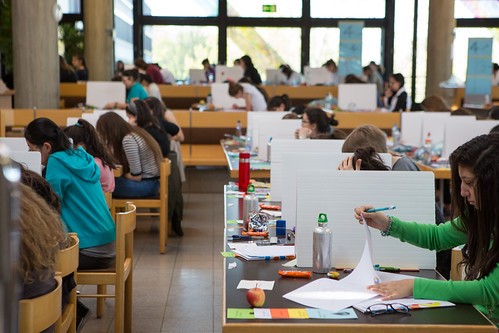

The title is slightly tongue-in-cheek. Nobody is recommending that students sleep through their tutoring sessions. But the evidence for getting a proper night's sleep before any serious academic work is, at this point, rather difficult to ignore — and parents of GCSE and A-Level students tend to be surprised by quite how strong it is.
What the Research Says
A study published in Advances in Medical Education and Practice (Jalali et al., 2020) sets out the stakes plainly from the outset: "Sleep is an inseparable part of human health and life, which is crucial in learning, practice, as well as physical and mental health. It affects the capacity of individual learning, academic performance, and neural-behavioral functions."
Drawing on a substantial body of prior literature, the same paper reports that students who slept adequately were twice as likely to find innovative solutions when confronted with complex mathematical problems, compared to sleep-deprived peers. That is not a marginal gain. That is a structural advantage available to any student who goes to bed at a reasonable hour. The research also found that the chance of academic failure was significantly higher in students with inadequate sleep compared to those with proper sleep patterns — in some studies, the difference amounted to over a year of academic delay.
A landmark study from MIT, tracking 100 students over a full semester using wearable devices rather than self-reported data, confirmed the picture in robust quantitative terms: "better quality, longer duration, and greater consistency of sleep correlated with better grades." Sleep alone accounted for nearly 25% of the variance in academic performance across the cohort.
It Is Not Just the Night Before
One of the more counterintuitive findings from the MIT research is this: there was no significant relationship between sleep on the single night before a test and test performance. What mattered was the pattern across the week and month preceding it.
This reframes the question considerably. Telling a student to get an early night before their Maths paper is not wrong, but it misses the point. The investment that pays dividends is consistent, quality sleep across the entire revision period — the weeks of preparation, the tutoring sessions, the practice papers. Each of those sessions either embeds material or fails to, and sleep is a significant determinant of which outcome occurs.
Why Sleep and Memory Are Inseparable
The mechanism here is well-established. Memory consolidation — the process by which new learning moves from short-term encoding into durable long-term storage — happens primarily during sleep, and particularly during slow-wave (deep NREM) sleep. Researchers describe it this way: encoded information that is not consolidated after exposure simply will not be remembered. Encoding is necessary but not sufficient. Sleep is what converts learning into retained knowledge.
Not sleeping, or sleeping insufficiently, can reduce the brain's capacity to absorb new information the following day by as much as 40%. For a student sitting down to a tutoring session having slept poorly, this is not a minor inconvenience. It is a meaningful reduction in the value of that session — regardless of the quality of instruction being offered.
The research published in Advances in Medical Education and Practice also notes that sleep disorders — even mild or undiagnosed ones — are associated with reduced academic performance, emotional instability, and impaired concentration. These are precisely the symptoms that tutors sometimes encounter in students who are otherwise well-prepared and motivated. Lack of sleep has also been associated with daytime sleepiness, which one body of research identifies as an independent predictor of academic underperformance.
Consistency Matters More Than Duration
One further finding is worth highlighting for parents managing a student's schedule across a busy term. Sleep consistency — the likelihood of being asleep and awake at roughly the same times each day — has been shown to have a greater impact on academic performance than sleep duration alone. Students with irregular sleep patterns, even if the total hours are technically adequate, tend to perform worse than those with a steady routine.
This has practical implications. The weekend lie-in that feels like rest can, in fact, disrupt the circadian rhythm enough to affect the quality of sleep in the days that follow. A consistent bedtime and wake time — even at weekends, even during half-term — appears to be one of the most straightforwardly effective things a student can do to support their academic performance.
What This Means for Tutoring
At Gravitas, our sessions are typically sixty minutes of focused, demanding work. A student who arrives having slept well is neurologically prepared for that work: their capacity to encode new information is intact, their working memory is functioning, and they are in a position to benefit from the session. A student who has had four or five hours, or whose sleep pattern has been erratic across the week, is working at a significant disadvantage.
This is not a reason to reschedule sessions. It is a reason to take sleep seriously as part of the broader preparation that surrounds them — as seriously, in fact, as the revision itself.
The evidence is robust. The intervention is free. And unlike most things that are supposed to improve academic performance, it is also genuinely restorative.
Sources: Jalali R et al., "The Effect of Sleep Quality on Students' Academic Achievement," Advances in Medical Education and Practice, 2020 (PMC7381801);
Czeisler et al., "Sleep quality, duration, and consistency are associated with better academic performance," npj Science of Learning, 2019;
Sleep Foundation, "How Memory and Sleep Are Connected"; ScienceDirect, "Sleep and academic performance: measuring the impact of sleep."