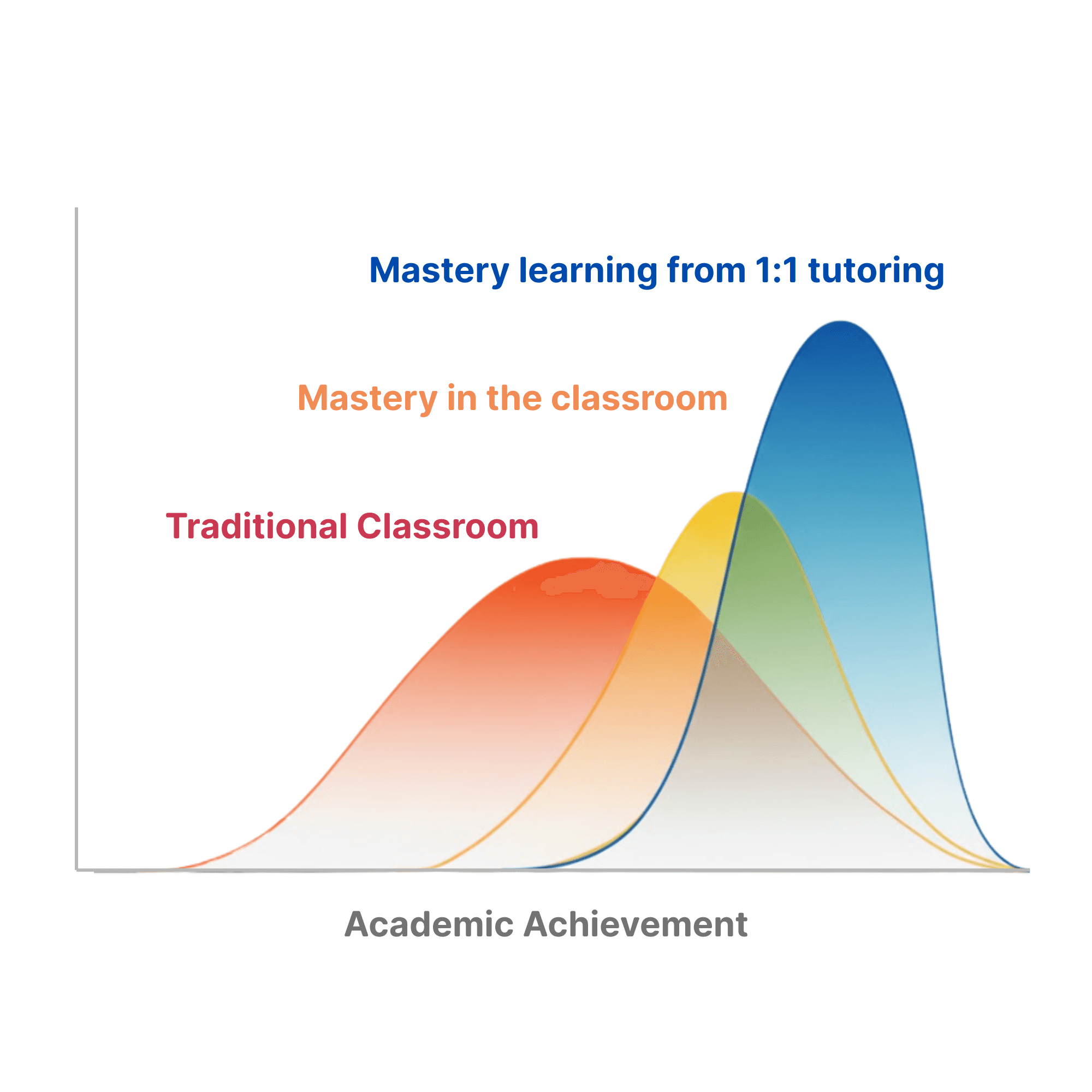
The promises made for AI tutors are seductive. The Department for Education, announcing its AI tutor trial, spoke of "personalised, one-to-one learning support — levelling the playing field for those who cannot afford private tutors." Blair, Altman, Gates and others have gone further still, anticipating an era of educational abundance in which the scarcity of good teaching is simply engineered away.
I am inclined to take these claims seriously rather than dismissing them. These are not unintelligent people. But having spent time with AI tutoring platforms and observed what they actually do with real students, I think we are still a considerable distance from anything that might justify the more ambitious predictions. There are three reasons for this — and none of them are the ones usually cited.
The Motivation Problem
The most common defence of AI tutors runs roughly as follows: the technology will improve, the interfaces will become more natural, and the sceptics will be proven wrong by events. That may well be true of some objections. It is not, I should think, true of this one.
A human tutor's chief contribution to a student's education is not the quality of their explanations. It is the relationship. As Gilbert Highet observed decades ago, "the business of the teacher is to pass currents of interest and energy through the facts so that they melt, fuse, become interconnected, acquire life, and grow into vital parts of the minds which hold them." A student who has been genuinely inspired by a tutor — who has felt, perhaps for the first time, that a subject has a pulse — does not forget it. That experience belongs to the human register.
An AI tutor, however fluent, cannot replicate it. Without prior motivation, the median student will find the interaction either demoralising or, more likely, simply beside the point. Anyone who has asked Alexa a question and received a competent but hollow answer will understand the register. The emotional manipulation of digital platforms — the cheerful affirmations, the streaks, the badges — tends to produce either compliance or contempt, not curiosity.
The likely result is that any genuine benefit from AI tutors will accrue to students who are already motivated: autodidacts, high-stakes exam candidates, those from homes where academic effort is already valued. That is not levelling the playing field. It is widening the gap.
The Aesthetic Problem
This one is rarely discussed, which is itself rather telling.
Children are spending a substantial proportion of their childhoods in front of screens. Health professionals and parents are, with some justification, concerned. Before we add yet more screen time to that picture, one might reasonably ask whether the experience on offer is worth the cost.
Peruse a typical AI tutoring platform and you will find something visually busy, emotionally hollow, and aesthetically negligible. The iconography is placeless and genderless; the palette is the palette of a thousand other apps; the interface simultaneously over-stimulates and under-nourishes. These platforms are, in a rather pointed irony, themselves a manifestation of what AI does to creativity when left to its own devices.
Tools like Anki have succeeded in part because of their restraint — a simple, functional interface that does not attempt to perform enthusiasm. The question worth asking of the next generation of AI tutoring products is whether they can show the same discipline. On current evidence, I should be very surprised if most of them managed it.
The Personalisation Problem
The strongest genuine case for AI tutors rests on their ability to identify learning gaps. A system that can diagnose precisely where a student's understanding breaks down, and target practice accordingly, offers something that a single teacher managing a class of thirty genuinely cannot.
This is real. The problem is that most platforms do not stop there. During onboarding, students are invited to share their interests, and the platform then serves content calibrated accordingly: maths questions framed around Harry Potter, history through the lens of a student's favourite footballer, reading comprehensions about whatever the algorithm has determined they already enjoy.
The appeal to parents is obvious. The educational logic is, to put it generously, questionable. E D Hirsch, Daisy Christodoulou, and a considerable body of curriculum research have spent decades demonstrating that the educational enterprise consists precisely in introducing students to knowledge and ideas they would not have encountered on their own. Children do not know what they do not know. A system that begins by asking what they already care about, and then constructs an experience around that answer, is working against the very thing education is supposed to achieve.
Where This Leaves Us
None of this is to say that AI has no role in education. There is at least one example worth paying attention to: Eedi, a platform that works alongside human tutors in a classroom setting, uses machine learning primarily to identify learning gaps, maintains a simple and uncluttered interface, and does not invite students to personalise their experience to their existing interests. It is not beautiful. But it is disciplined, and there is something to learn from that.
The pattern that emerges from the better implementations is consistent: AI works in education when it operates as a tool in the hands of skilled human teachers, not as a replacement for them. The motivational infrastructure, the aesthetic environment, the relationship that makes a student want to understand something — all of that still belongs to the human side of the equation.
At Gravitas, we are under no illusion that the technology will stand still. I should be the last person to suggest that tutoring in 2035 will look identical to tutoring today. But I am quite confident that the irreducible core of what makes one-to-one teaching effective — a skilled person, paying close attention to a single student, over time — will not be automated away. The claims of disruption are, for now, considerably ahead of the evidence.